Shaping User-Centric Energy Solutions Through Clear Product Vision and Delivery Alignment
.png)
The critical focus area was the HEMS app—an essential tool that enables customers to monitor, control, and optimize their energy use, including integrations with devices like solar panels, batteries, and heat pumps. As a core part of the provider's smart energy ecosystem, the app is instrumental in helping users reduce costs and actively contribute to the energy transition. However, inconsistent inputs and unclear requirements were slowing development across regions. Teams lacked a shared understanding of priorities, which led to delays and fragmented progress.
Initiatives, validated with 20 stakeholders and tested with 60+ users.
Months, from concept to tested and validated design for the full relaunch foundation.
Accelerating Delivery of the HEMS App with a Unified Requirements Process
We worked closely with the provider and gridX to define clear, actionable requirements and align cross-functional stakeholders around shared goals—bringing clarity to what needed to be built, and why.
- Stakeholder Alignment: Facilitated working sessions with over 20 cross-functional stakeholders to align on business objectives, technical constraints, and user needs.
- Actionable Requirements: Defined clear, actionable requirements for prioritized use cases, grounded in strategic priorities and customer needs.
- Backlog Management: Equipped 10 development teams with a detailed, unified, and prioritized product backlog to provide clear direction and momentum.
.jpg)
.jpg)
- Unified Vision: A unified target picture and product backlog for a user-centered product across Europe.
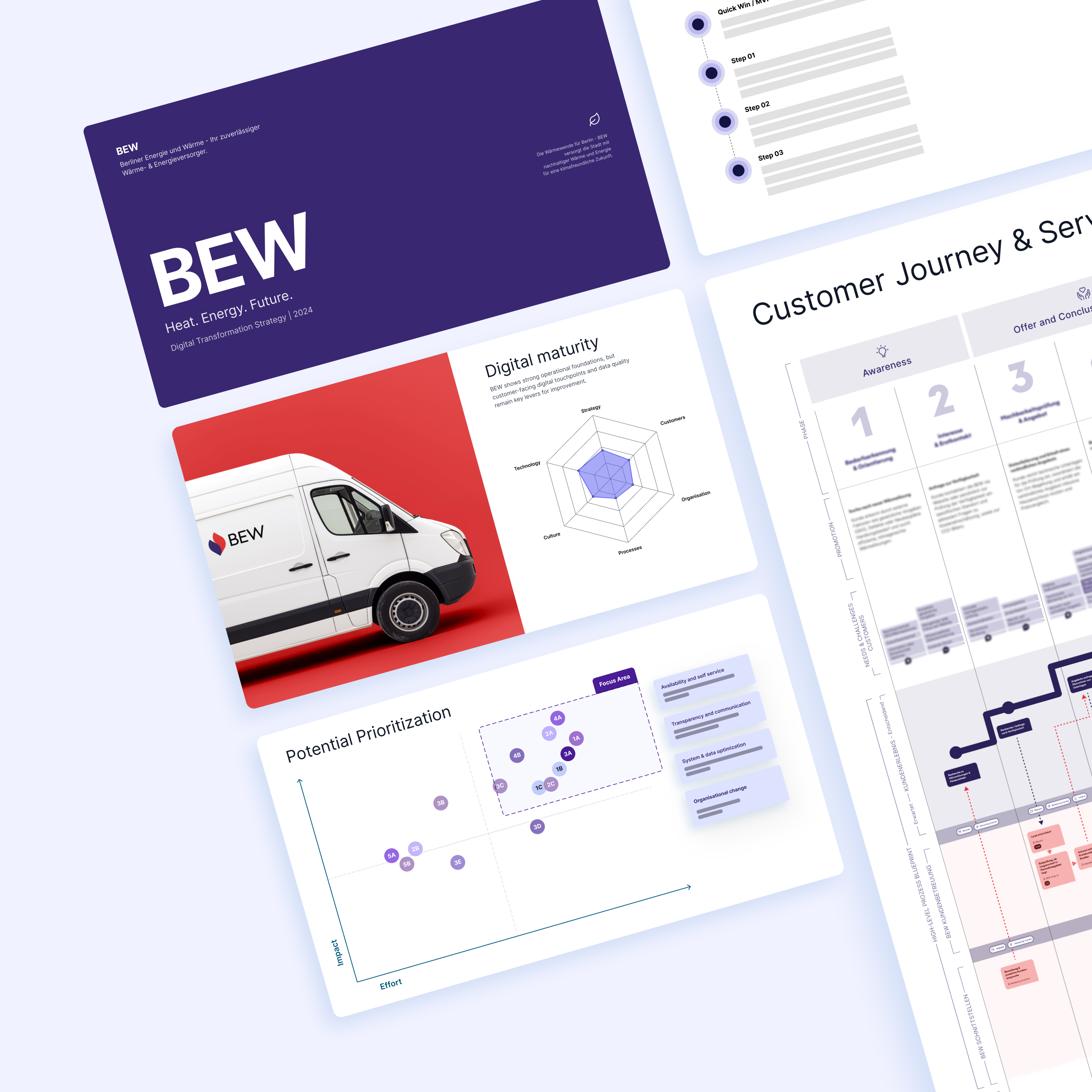
- Speed to Impact: 14 clearly scoped and validated initiatives delivered within just 9 weeks.
- Stakeholder Synergy: Alignment across 20+ stakeholders from multiple teams and markets.
- Delivery Excellence: Accelerated progress and improved delivery consistency across 10 development teams.
.jpg)
- Co-Creation: We conducted deep-dive working sessions to reconcile strategic ambitions with real-world use cases, ensuring the product vision was grounded in customer truth rather than internal assumptions.
- Structured Validation: Each initiative was treated as a hypothesis, validated through structured testing with over 60 users to ensure relevance and impact from day one.
- Strategic Prioritization: We applied the Culture pillar of our framework to break down silos, fostering shared ownership across departments—from the boardroom to the field.
- User-Centric Benchmarking: We tied every item in the backlog to specific KPIs, such as retention, engagement, or energy literacy, to ensure every development effort moved the business forward.