AI for Digital Products
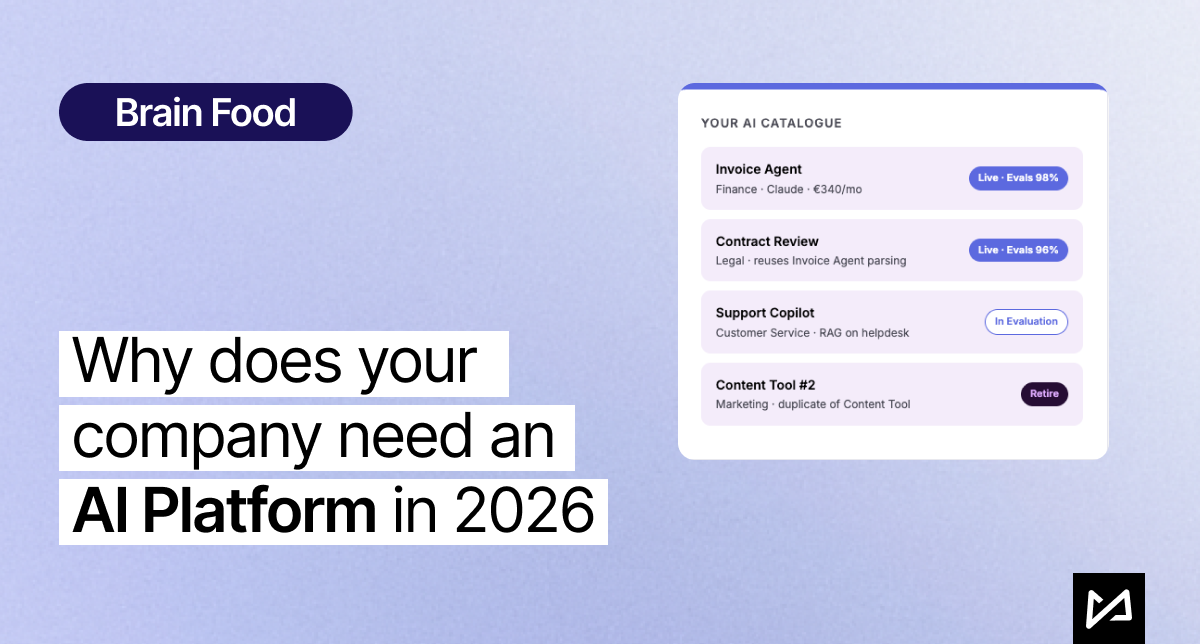
What is an AI Platform and why your company needs one

Let’s be honest — most customer journey maps don’t actually improve the customer experience.
They might look good in a workshop or tick the box in a strategy deck, but they often fail to create meaningful change. Why? Because too many journey maps are built as abstract exercises rather than operational tools. They're based on assumptions, not real data. They focus on idealized paths instead of actual behavior. And worst of all — they often stop at “insight,” without ever reaching “action.”
Some typical issues we see:
Let’s take an example: a company notices high drop-off during sign-up. They map the journey and see the issue lies between ad click and onboarding completion. Their conclusion? Redesign the signup flow. But what they miss is that the actual blocker is misaligned messaging — the ad overpromises, and the product underdelivers. Without deeper analysis, the map points to surface-level fixes and misses the root cause.
In today’s market, a customer journey map shouldn’t just be descriptive — it must be diagnostic and actionable. It should help you pinpoint where value is lost, where trust breaks down, and where opportunity hides.
Here’s how to build a journey map that actually works: one that aligns your teams, uncovers key moments, and delivers results you can measure — not just admire in Miro:
Before jumping into stages, personas, or touchpoints, zoom out and ask the most important question: Why are you doing this? Are you aiming to increase retention? Boost conversion rates? Improve post-purchase satisfaction?
🎯 Why it matters: Without a clearly defined purpose, you risk collecting data you don’t need and solving problems that don’t exist. A focused objective helps you prioritize what matters and align your journey map with your business strategy — not just your customer service wishlist.
Great journey maps start with deep customer understanding. Combine qualitative inputs (interviews, surveys, support conversations) with quantitative data (purchase behavior, click paths, engagement metrics) to create rich, actionable personas.
These profiles should go beyond basic demographics. What motivates your customers? Where do they get stuck? What channels do they prefer — and why?
🧠 Why it matters: If you don’t understand your customers’ goals and frustrations, every “personalization” attempt is just guesswork. Detailed profiles help you focus on what truly drives decisions, so you can make meaningful improvements across the journey.
Every journey has a rhythm. Your job is to define it.
Break down your customer lifecycle into distinct stages — typically: Awareness → Consideration → Decision → Post-purchase → Loyalty. This step gives structure to your map and highlights where friction may be hiding.
🗺️ Why it matters: Each stage has its own needs, blockers, and opportunities. If you don’t define these, your communication risks being too generic — or missing the mark entirely. A clear structure ensures you’re delivering the right value at the right time.
Now that you know your stages, it’s time to get real. Map the actual path your customers take — not the one you wish they took. Include every interaction: landing pages, chats with support, email flows, app screens, delays, drop-offs.
💡 Why it matters: Seeing the full picture exposes hidden patterns and inefficiencies. Maybe your onboarding is causing drop-off. Maybe support is answering the same question 40 times a week. A visual journey reveals these issues clearly and helps you make data-backed decisions.
Not all touchpoints are equal. Some interactions make a disproportionate impact — good or bad. These include:
⚡ Why it matters: These moments shape how customers feel about your brand. Focusing on them allows you to create confidence, reduce hesitation, and increase loyalty. They’re where customer relationships are made (or lost).
Let’s be honest — no journey is perfect. But if you’ve done the steps above, you now have a clear view of what’s not working.
Look for gaps, miscommunications, friction points, and missed expectations. Common culprits: ❌ Poorly timed messages ❌ Generic content that doesn’t match the stage ❌ Unclear value propositions ❌ Long waiting times for support or delivery
🔧 Why it matters: These issues aren’t just annoying — they’re expensive. Each one is a potential deal-breaker. Spotting them early allows you to resolve blockers before they become revenue leaks.
Insights are only as powerful as what you do with them. Identify which improvements will deliver the biggest impact, assign clear ownership, and create a practical roadmap for execution.
This might mean launching a better welcome flow, refining landing page copy, or investing in customer education materials — the goal is to turn your map into measurable change.
✅ Why it matters: Mapping without action is just a workshop. By translating insights into implementation, you close the loop — and start seeing real business results like improved NPS, higher conversion, and lower churn.
Journey mapping isn’t a documentation exercise — it’s a business accelerator. Done right, it aligns teams, removes friction, and surfaces opportunities for value creation at every stage.
💬 Want to discuss how to turn your customer journey into a growth engine? Let’s explore it together!